
The Custodian
Release, Reflection and the Work That Travels

THE CUSTODIAN was a three day exhibition held in my Hackney Wick studio in London, 28–30 January.
It marked the closing of a chapter as I prepared to release the studio and redistribute works, artefacts, and traces from more than a decade of practice.
More than anything, the exhibition became a space of gathering, intention and reflection.
Over those three days I realised how important traces, records and evidence are. Small gestures that testify to the life of a practice and the communities that sustain it.
Small gestures matter. Photographs, notes, objects, documentation, fragments of performance and production. They testify to the life of a practice and the communities that sustain it.
In an age of erasure and annihilation, we need more spaces for connection. Places where the deeply felt can surface, where incidental alignments can occur, and where art can move from one set of hands to another with care.
The Custodian was one such space: a ceremony of release, conversation and trust.
But it also revealed something more personal - how often I have struggled to see myself clearly outside the mirrors of recognition and achievement.
This exhibition allowed me to experience a different kind of reflection.
Gathering/ Art as Meeting Place
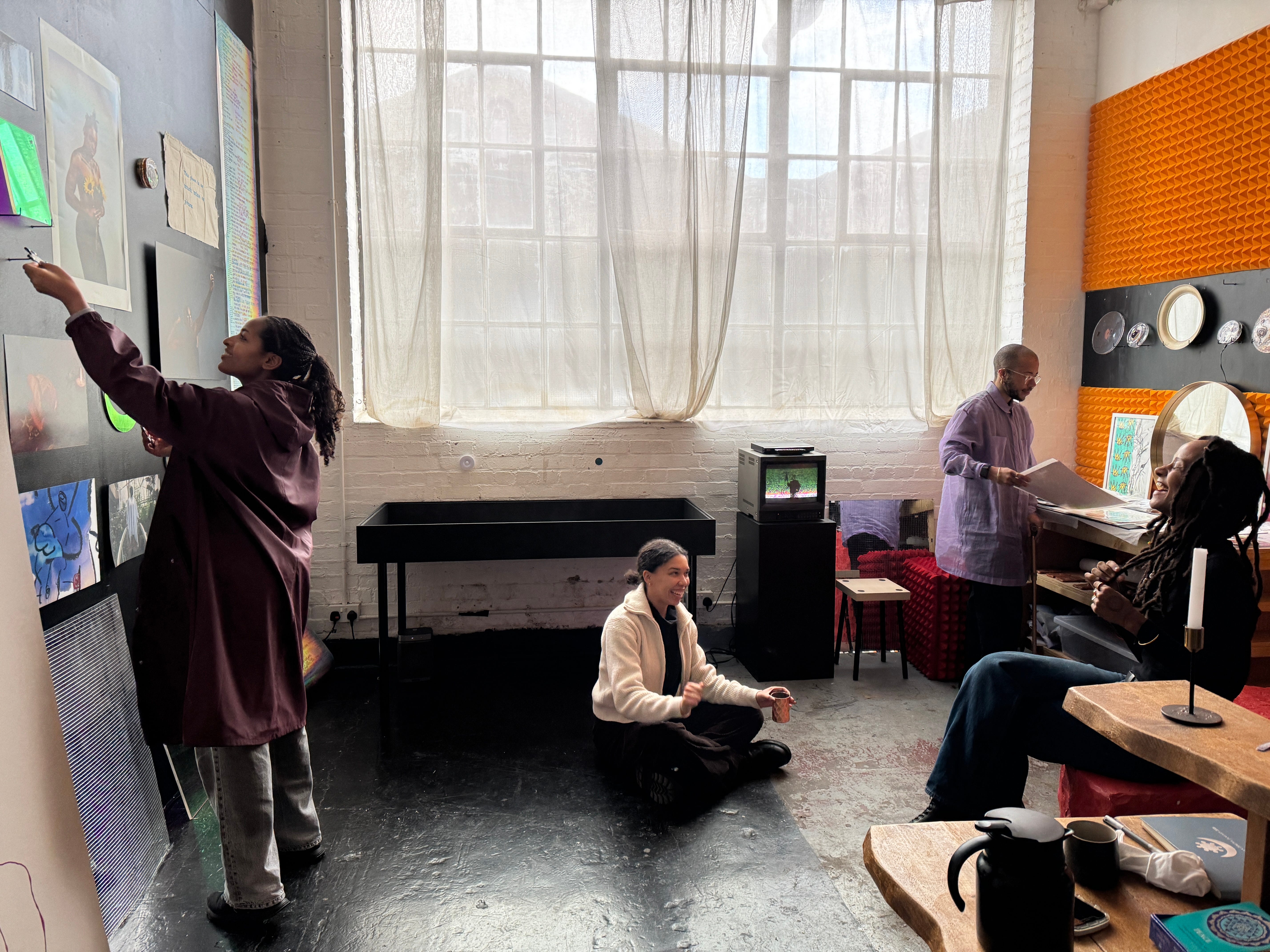
Over three days my studio transformed into a place of encounter.
People arrived slowly. Some came alone, others in small groups. They moved through the space carefully, encountering mirrors, objects, photographs and fragments of work accumulated across years of making.
There were moments of conversation, laughter, quiet observation.
What stayed with me most were the moments between things, the informal exchanges that happen when people feel comfortable enough to stay.
Someone laughing in the corner of the room.
Two people discussing a work together.
Someone pausing quietly in front of an object.
In an age that often fragments us, spaces of connection feel more necessary than ever.
The Custodian became a temporary commons.
For those three days the studio functioned not only as an exhibition space but as a meeting place where art, memory and community existed in the same room.
People could take their time. They could interact with the works and with each other. They could ask questions, share stories, or simply sit and absorb the atmosphere.
Creating these kinds of containers matters deeply to me.
The exhibition reaffirmed something I have long believed: that art spaces can operate as places of conviviality - environments where people feel welcomed into presence rather than pressured into consumption.
Intention and Release/ Setting the Container
Each day I opened the space with intention.
Before guests arrived, I spent time preparing the room in my own way.
I lit candles.
I spoke intentions quietly into the space.
I made sound.
I moved my body.
These gestures were small but deliberate. They helped shape the atmosphere of the exhibition.
I recorded a short reflection while opening the space:
“I open the space by lighting candles, setting an intention for it to be filled with warmth, generosity, presence, kindness, truth, authenticity, openness and a shared commitment to abundance and reciprocity.”
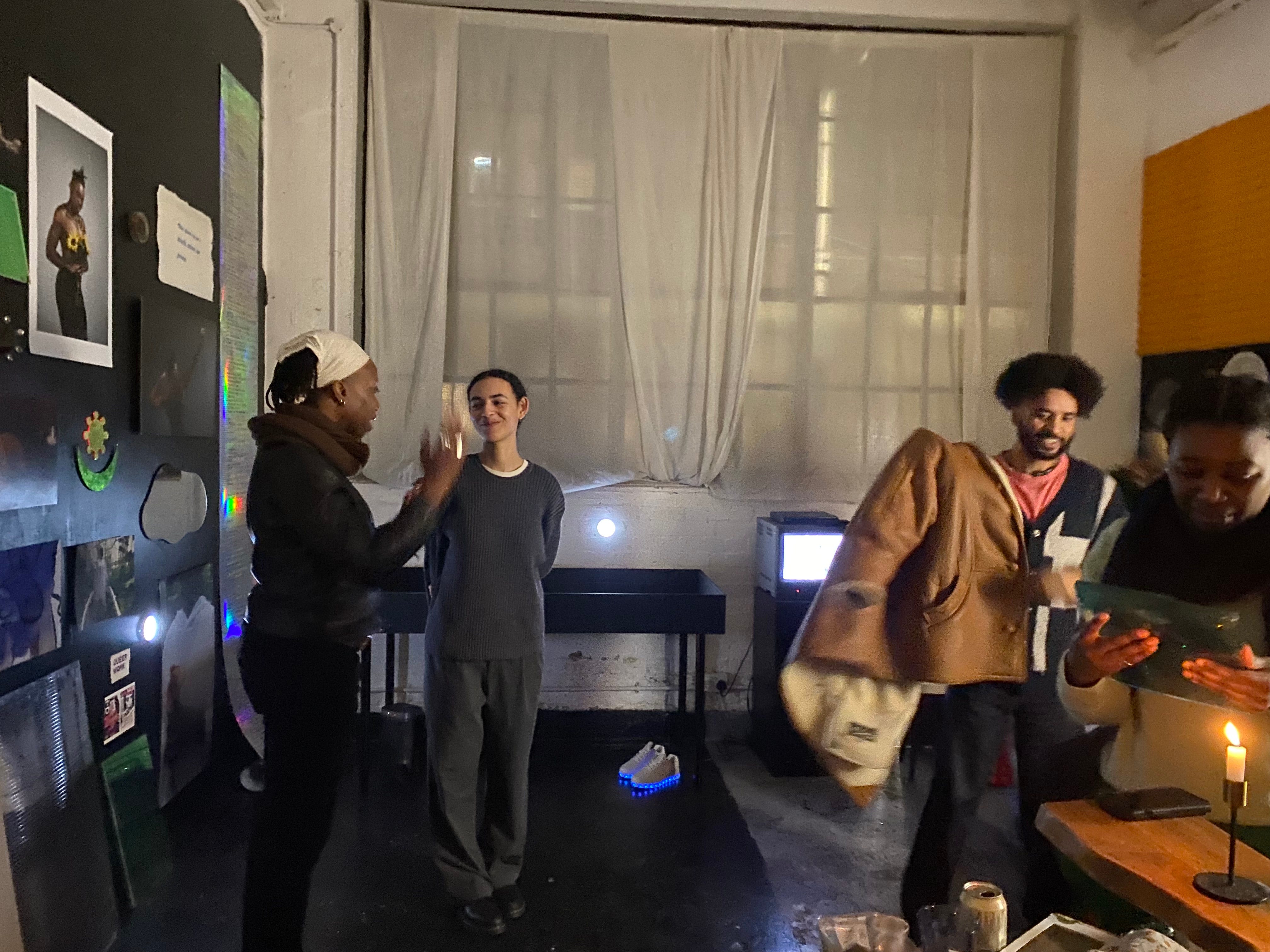
As evening approached, I activated what I came to think of as night mode.
Candlelight and spotlights transformed the room completely. Mirrors caught the light. Objects cast shadows. Works appeared differently than they did during the day.
The exhibition became something else.
This was the gift of the moment - seeing the work again in a new way.
Seeing how light interacts with surfaces, with presence, with attention.
To create work that interacts with light and presence in this way feels like a gift in itself.
To have held this space, to have crafted this container, I felt very lucky.
Mirrors/ Reflection and Self-Recognition
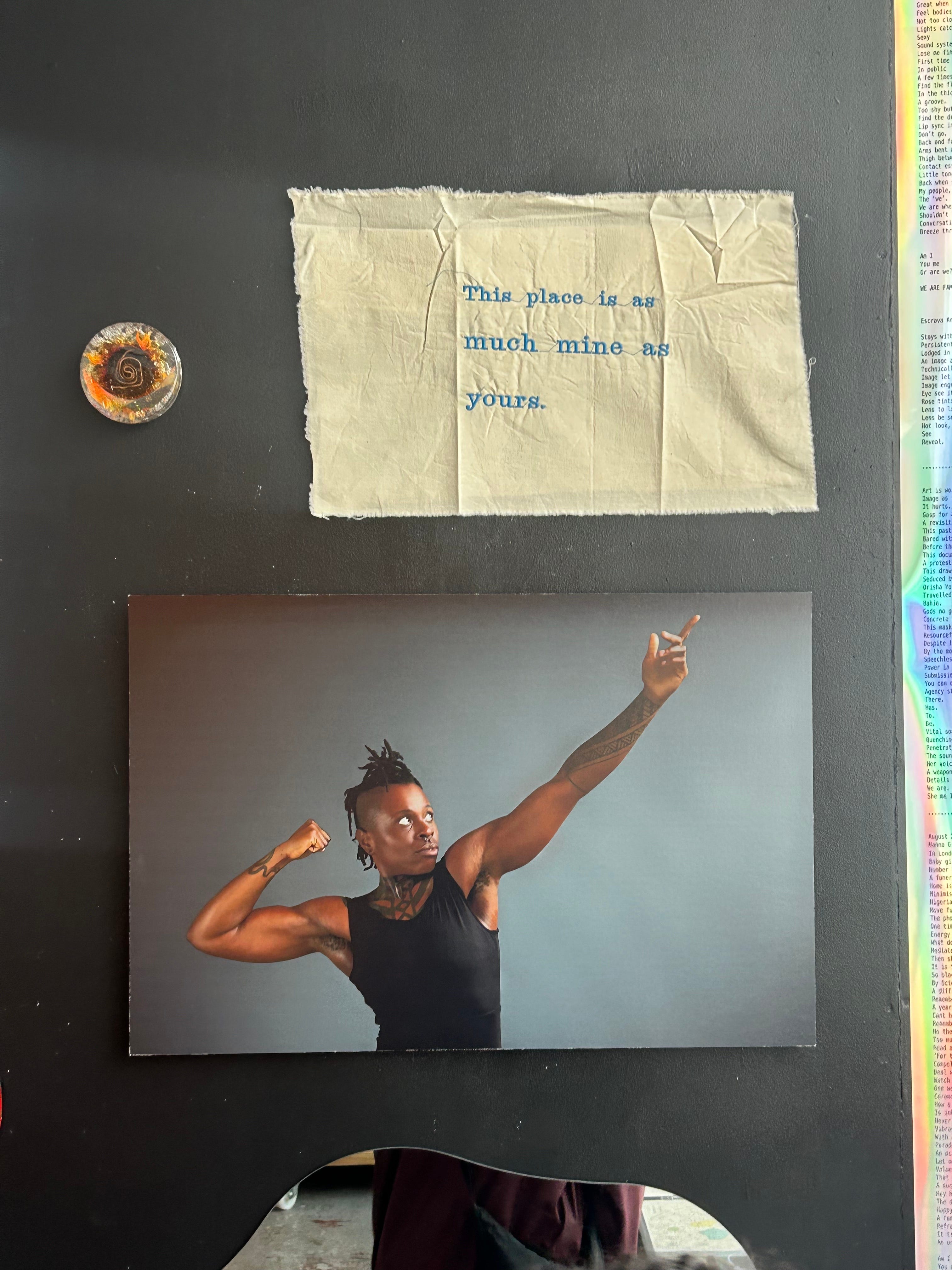
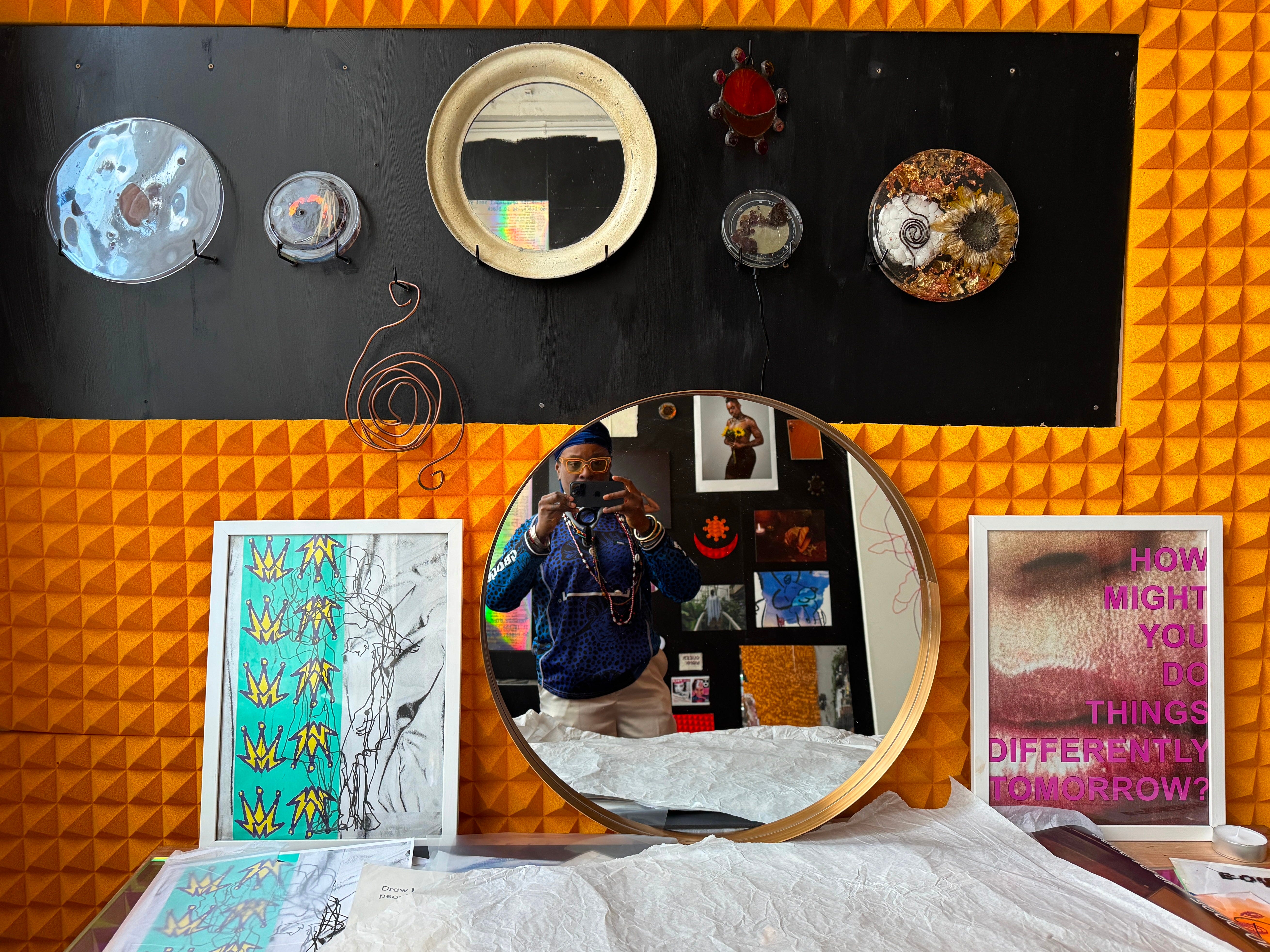
Mirrors have always played a role in my practice.
For me, the mirror is both prop and portal. It creates a moment of self-recognition.
In many of my installations and moving image works I use reflective surfaces to alter perception, creating moments where the viewer encounters both the artwork and themselves.
Rather than thinking of my work as portraiture, I think of it as reflection that returns the viewer to themselves.
By incorporating literal reflective surfaces, that reflection can occur both physically and metaphorically.
During The Custodian exhibition, mirrors were everywhere.
They caught the light.
They caught the movement of bodies in the space.
Sometimes they caught me too.
And that brought another reflection to the surface: Where do I struggle to see myself clearly?
For many years I linked my sense of worth to the visibility of my work….exhibitions, opportunities, recognition.
Achievement became a mirror.
Without that mirror, it was sometimes difficult to see myself clearly.
But this exhibition asked something different.
It asked me to stand inside the work without the armour of achievement.
To hold the space rather than perform it.
To allow the community gathered there to become another kind of mirror.
Because in the end, we reflect one another.
The light I transmit is mirrored in my artwork, a beacon for those who struggle to see themselves clearly.
And sometimes the archive itself becomes the mirror we need.
I have always been a self-archivist, driven by the desire to document and map my experience in this body.
In moments like this, I understand why.
Release/ Letting the Work Travel
At the centre of The Custodian was the act of release.
Many of the works on display were offered to visitors as objects that could move into new custodianship.
Rather than selling them in a conventional sense, I wanted the work to continue its life with people who resonated with it.
This gesture required trust.
It also required letting go of control.
The guestbook became an important part of this process. People signed their names and recorded the works that moved with them.
The book became a living record. A trace of what had passed through the space and what had travelled onward.
There was something beautiful about watching the work leave the studio and enter the world again.
Not as a loss, but as continuation.
What Remains
After the exhibition closed I found myself reflecting on what I actually want to carry forward.
The process of release brought a surprising clarity.
Much of what I need is already here.
A few key images.
A Sun Disc.
Instruments and objects that allow me to shape atmosphere and resonance.
These things form part of my toolkit.
I am interested in creating spaces that can scale up or down depending on their context.
Tools that allow a container to form.
The Custodian reminded me that a studio is never only a place where work is made.
It is a place where relationships accumulate.
Where traces gather.
Where a life in art becomes visible.
In the end, the work travels on.
What remains is the practice of gathering, reflecting, and beginning again.
thank you for sharing